

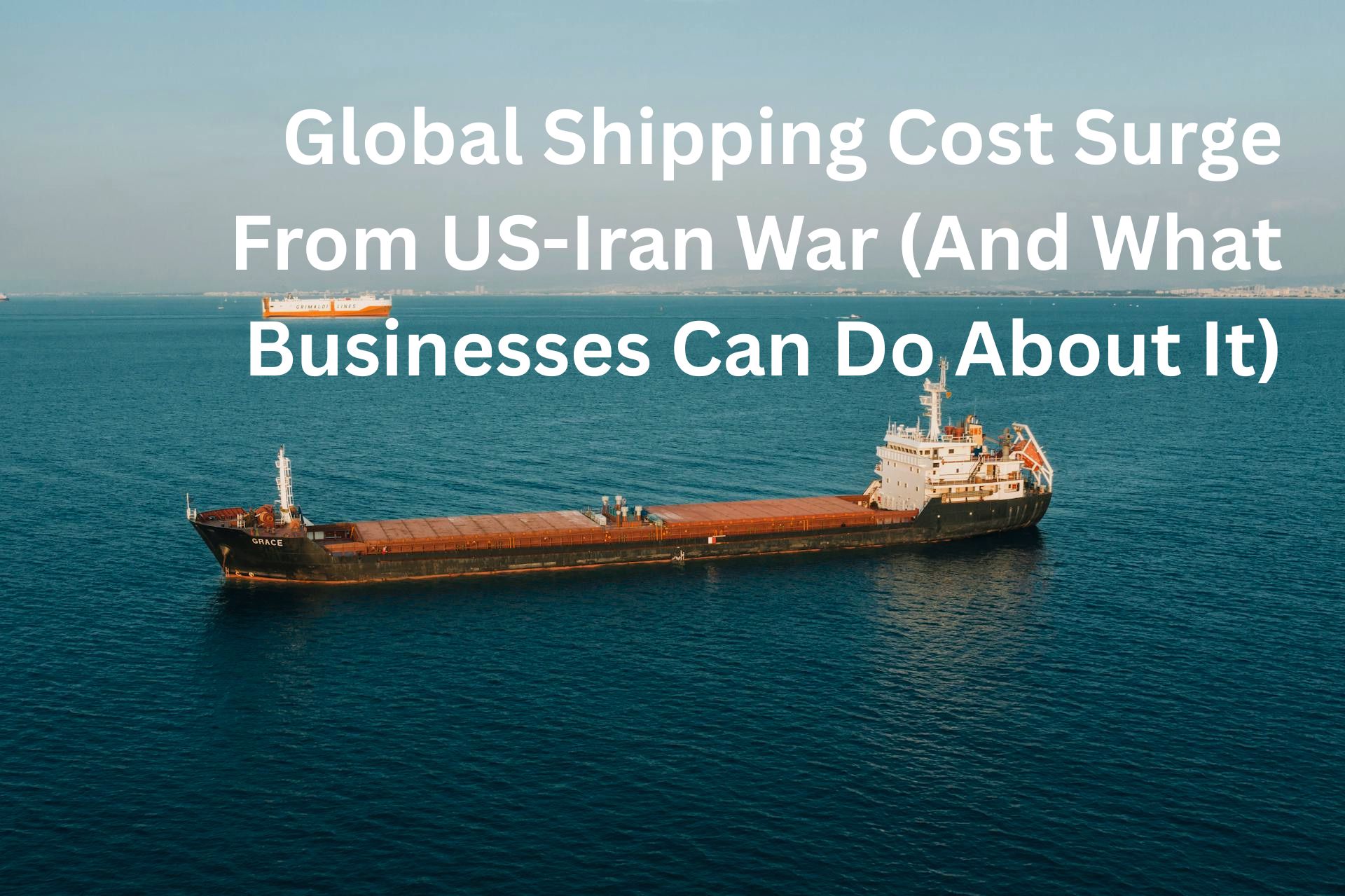
How the Iran Conflict Is Driving Up Global Shipping Costs (And What Businesses Can Do About It)
Recent geopolitical tensions in the Middle East—particularly the ongoing Iran conflict—are having a significant impact on global shipping and logistics costs. Businesses worldwide are beginning to feel the ripple effects, from rising freight rates to longer transit times and increased uncertainty in supply chains.
One of the key reasons behind this disruption is the strategic importance of the Strait of Hormuz, a narrow shipping passage that handles a large portion of the world’s oil supply. When tensions escalate in this region, shipping routes are affected almost immediately.
With threats to maritime traffic and actual disruptions occurring, shipping companies are forced to reroute vessels, increase security measures, and pay higher insurance premiums. This results in higher operational costs, which are ultimately passed down to businesses.
In fact, recent reports show that:
- Shipping costs have surged significantly due to fuel price increases and war-risk insurance
- Freight rates on some routes have increased by 30–50%
- Global oil prices have surged past $110 per barrel, increasing logistics costs across all modes
Beyond costs, transit times are also being affected. Ships avoiding high-risk zones are taking longer routes, sometimes adding 10–20 days to delivery timelines.
What This Means for Businesses
For businesses relying on imports or exports, these disruptions can lead to:
- Increased shipping costs
- Delays in delivery schedules
- Inventory shortages
- Higher operational expenses
Industries such as manufacturing, retail, and e-commerce are particularly affected, as they rely heavily on predictable supply chains.
How Cheng Logistics Helps You Navigate This
While global disruptions are unavoidable, the right logistics partner can make a significant difference.
At Cheng Logistics, we help businesses manage these challenges through:
1. Route Optimisation
We evaluate alternative shipping routes to minimise delays and avoid high-risk zones where possible.
2. Multimodal Solutions
By combining air, sea, and land transport, we help you maintain flexibility and reduce dependency on a single route.
3. Cost Planning & Consolidation
We optimise shipment planning (FCL/LCL, consolidation, scheduling) to help control rising logistics costs.
4. Responsive Coordination
In times of uncertainty, communication matters. We keep you updated and help you adapt quickly to changing conditions.
Key Takeaway
Global logistics is becoming more volatile, and geopolitical risks are now a permanent factor in supply chain planning.
Businesses that succeed are not those who avoid disruption—but those who adapt quickly with the right logistics strategy.
Need help navigating rising shipping costs?